
This is a research tool under development, not a clinical tool. Click here to read the disclaimer.
Progression analysis implements the Global Consensus Criteria (Gomes et al., 2015) by evaluating change relative to adaptive measurement repeatability (Balal et al., 2025) which account for disease severity. Changes that do not exceed repeatability limits are considered consistent with expected measurement variability and are not classified as true progression. Keratoconus metrics are evaluated across three categories: anterior curvature (front Kmax, K1, K2), posterior curvature (back Kmax, K1, K2), and minimum pachymetry. A category is classified as progressed if any metric within it exceeds its respective threshold. Overall progression status is defined as:
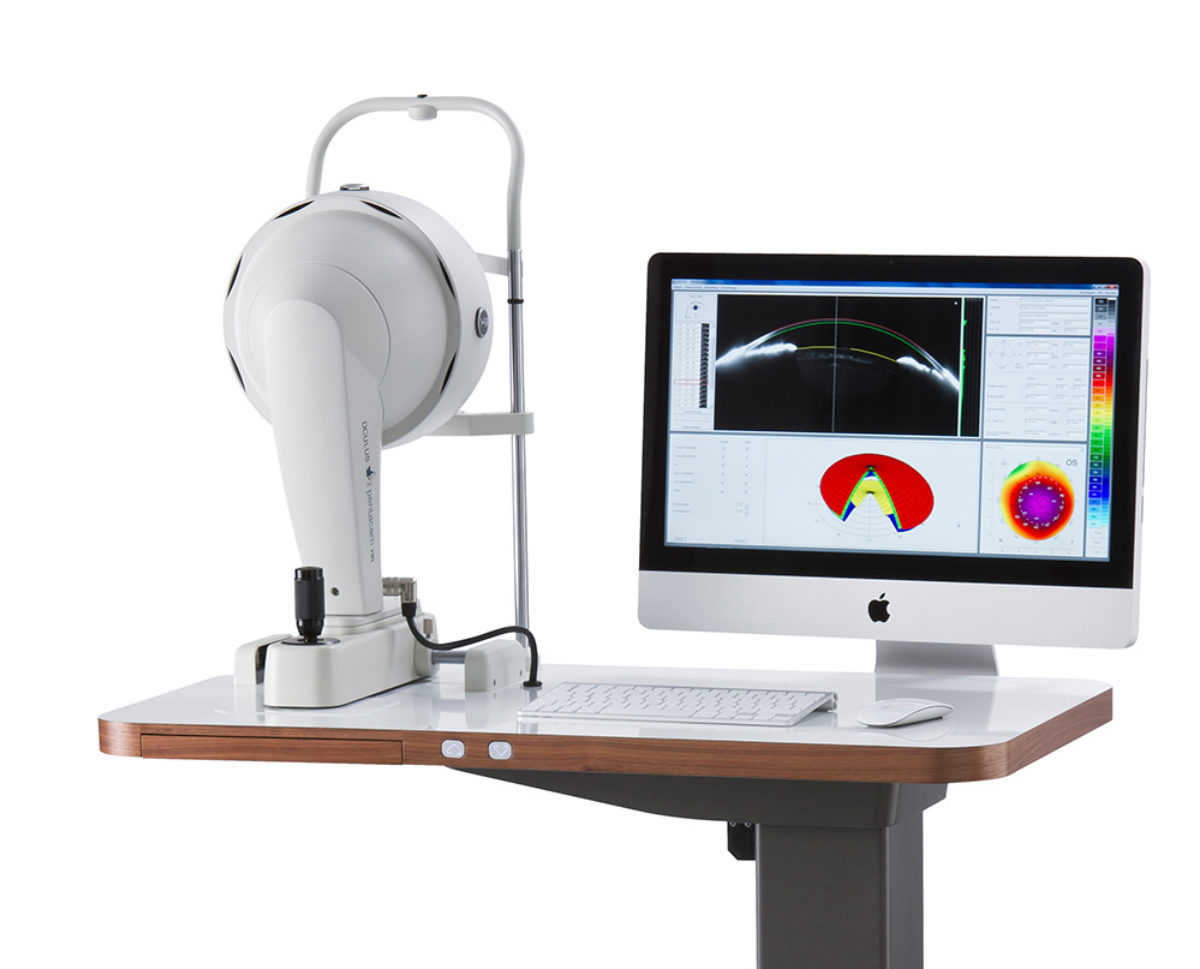
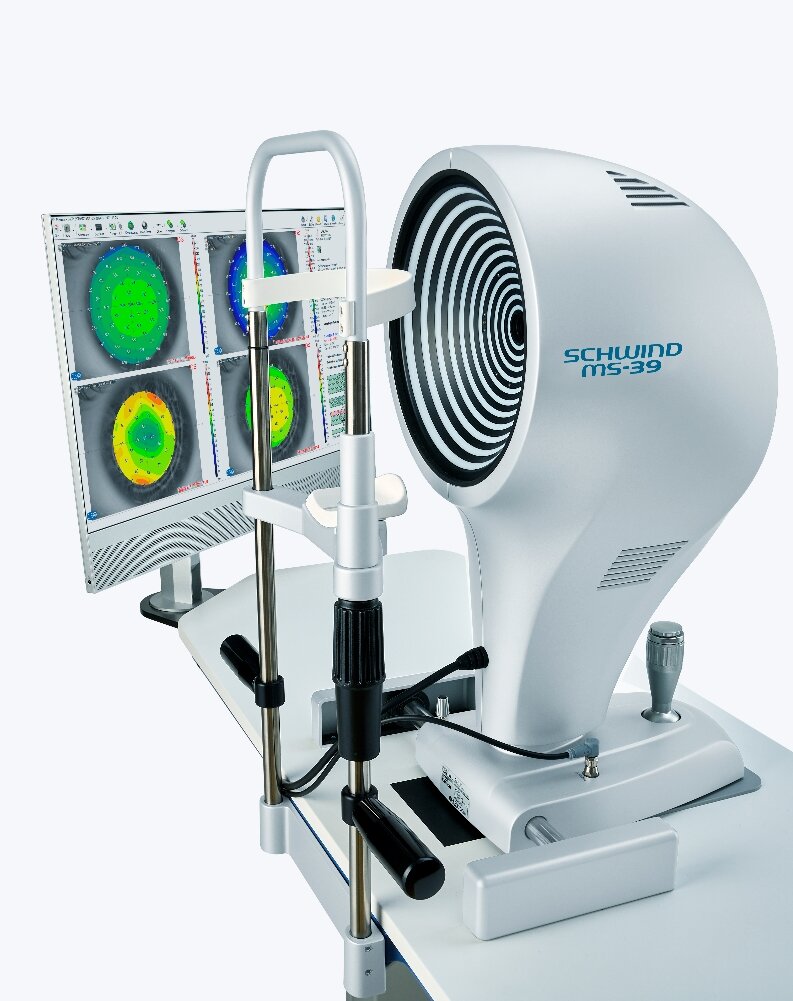
The AI risk calculator integrates machine learning–derived feature importance with longitudinal tomographic data to estimate the individualised probability of keratoconus progression. The model was trained using a large, multicentre dataset incorporating imaging and tabular parameters, with progression labels defined according to adaptive precision limits and global consensus criteria. From the full feature set, the most predictive variables were selected using systematic feature ablation and importance ranking, ensuring optimal balance between model performance and clinical interpretability. These variables are standardised and processed through a supervised learning framework that outputs a calibrated risk probability for progression within a two-year (MS39) or three-year (Pentacam) time horizon. Model training employed cross-validation, class imbalance correction, and regularisation techniques to minimise overfitting and enhance generalisability. Risk outputs are mapped to clinically meaningful categories aligned with established progression thresholds, enabling integration with conventional progression analysis and supporting risk-stratified clinical decision-making (Balal et al., 2026).
This research is supported by: